Court Dismisses Drake’s Defamation Suit Against UMG: What Happened and Why It Matters
What the Judge’s Ruling Said in Plain Terms
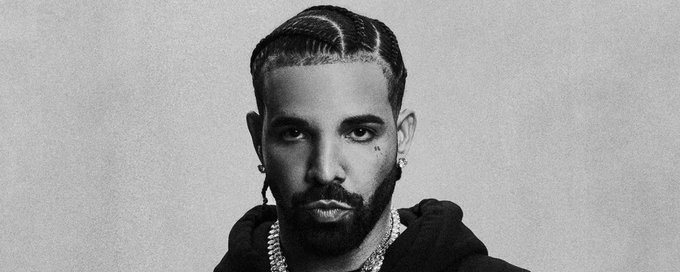
A federal judge has thrown out Drake’s defamation lawsuit against Universal Music Group (UMG) over Kendrick Lamar’s diss track “Not Like Us.” In simple terms, the judge decided that the song’s lyrics – even though they explicitly call Drake a pedophile – do not count as defamation under the law. Judge Jeannette Vargas ruled that the statements in the track were “non-actionable opinion,” not factual claims. In her written opinion, she explained that no reasonable listener would take the outrageous insult literally given the context of a heated rap battle.
The court’s opinion emphasized context above all. Judge Vargas described “Not Like Us” as part of a “vitriolic war of words” between Drake and Lamar – essentially an over-the-top rap feud, not a news report. She noted that the song was filled with profanity, trash-talk, threats, and hyperbole, making it sound nothing like a factual accusation. In one memorable line, the judge wrote that a diss track is not the product of a sober, fact-checked investigation – it’s understood as a flurry of “hyperbolic vituperations” (over-the-top insults). Even though calling someone a pedophile is obviously a serious claim, Vargas reasoned that listeners know rap battles involve “incendiary language” and wild accusations not meant to be taken at face value.
In short, the judge concluded that Kendrick’s lyrics were an opinionated attack rather than a literal allegation of criminal behavior, so they can’t be the basis of a defamation lawsuit. This meant Drake’s case was dead on arrival – dismissed at the very first stage, before it could ever go to a jury. Drake’s team immediately announced plans to appeal the ruling, but as of now, the court’s message is clear: “Not Like Us” might be vicious, but legally it’s not defamation.
The Legal Basis for Dismissal: Opinion vs. Defamation
Why exactly did the court say the diss track wasn’t defamatory? Defamation law (which covers slander and libel) generally requires a false statement of fact that harms someone’s reputation. The critical word here is fact. If the statement is just an opinion or obvious exaggeration, it usually can’t be treated as defamation in the eyes of the law. Judge Vargas zeroed in on this distinction. She asked whether “Not Like Us” could “reasonably be understood to convey as a factual matter that Drake is a pedophile or has engaged in sexual relations with minors.” Her answer was a firm no. In “the overall context” of an ongoing rap beef, no average person would think Kendrick Lamar was literally informing the public of Drake’s crimes. Instead, it sounded like trash-talk in a musical battle.
The judge bolstered this reasoning with specific examples from the song’s presentation. For instance, the singles cover art showed an aerial view of Drake’s Toronto mansion marked up with a dozen “sex offender” pins – a graphical way of calling him a predator. Judge Vargas pointed out that this image was “obviously exaggerated and doctored” and that “no reasonable person would believe” law enforcement actually designated 13 sex offenders in Drake’s home. In other words, everything about “Not Like Us” screamed over-the-top. The lyrics and imagery were so extreme that they signaled to listeners that this was artistic mud-slinging, not a factual exposé.
Legally, this falls under a well-established protection for speech: rhetorical hyperbole. U.S. courts have long held that even outrageous accusations may be protected if the context makes it clear they’re not meant literally. By likening Kendrick’s diss to a WWE-style promo or a heated argument full of insults, the court essentially said “people know this is just for show.” Therefore, Drake could not meet the first requirement of defamation – a defamatory false statement of fact – because the court deemed the statements non-factual in context. This meant the suit couldn’t go forward on defamation, no matter how harmful Drake found the song to be.
It’s worth noting that Drake’s lawsuit also tried to claim other legal violations (like “harassment” and even a New York business law about deceptive practices), but all of those claims hinged on the same basic issue – that UMG published a defamatory falsehood. Once the judge ruled the content was non-defamatory opinion, all those related claims collapsed too. In effect, the legal basis for dismissal boiled down to free speech protections: the First Amendment doesn’t allow a superstar (even one as mighty as Drake) to sue over insults delivered in an obvious rap battle format.
Comparing Drake’s Case to Other Defamation Battles
Drake’s failed lawsuit can be better understood by comparing it to other high-profile cases of alleged defamation or reputational harm. At first glance, one might think accusing someone of pedophilia is an open-and-shut case of defamation – it’s a heinous claim that would clearly damage anyone’s reputation. But context is everything. Contrast Drake’s situation with a famous case involving radio host “Star” (Troi Torain) and a New York City councilman. In 2006, DJ Star was fired after making vile on-air threats about a rival’s 4-year-old daughter. Outraged, Councilman John Liu publicly blasted the DJ as a “sick racist pedophile” and a “lunatic.” Star turned around and sued Liu for defamation, arguing that those labels were false and devastated his reputation.
On its face, Star’s case looked stronger than Drake’s – here was a public official explicitly calling someone a pedophile in serious media interviews, not in a rap lyric. Yet, Star’s lawsuit was also thrown out. The court decided that given Star’s own disturbing statements (he had mused about sexual violence against a child on air), Liu’s harsh words were essentially an opinion or criticism justified by Star’s behavior. An appeals court agreed, finding that using the term “pedophile” in this context was “an entirely warranted expression of opinion” based on the plaintiff’s conduct. In other words, because Star himself had said things no decent person would say about a child, calling him a pedophile was interpreted as Liu’s protected opinion of Star’s character, not a factual news bulletin that Star had actually committed that crime. The shock jock had no grounds to sue in the end.
The Star vs. Liu saga underscores a key similarity with Drake’s case: even a seemingly defamatory slur can be shielded as opinion if it stems from known context or rhetoric. In Star’s case, the context was his own outrageous conduct; in Drake’s, it was the accepted convention of rap feuds where artists trade exaggerated insults. Both cases show how courts are reluctant to intervene in wars of words, whether they happen in political arenas or in diss tracks.
For a stark contrast, consider a defamation case that did succeed: Cardi B’s lawsuit against YouTube blogger Tasha K. In 2019–2022, Cardi B faced a barrage of specific rumors from the blogger, who claimed the rapper had worked as a prostitute, used hard drugs, and even contracted sexually transmitted diseases. These weren’t song lyrics or heated responses to provocation – they were presented as if they were factual gossip in dozens of online videos. Cardi B sued for defamation and won decisively: a jury awarded her over $4 million in damages in 2022.
Why did that case succeed where Drake’s failed? The big difference is evidence and framing. The blogger’s statements about Cardi were assertions of fact (and provably false) – for example, claiming someone has an STD or committed crimes can be verified or debunked (Cardi B produced medical records and proof to the contrary in that case). And importantly, there was no artistic or hyperbolic context to soften those claims; they were simply defamatory rumors spread with apparent malice (indeed, the YouTuber admitted on the stand that she knowingly lied for profit). In that scenario, the court had no trouble finding defamation, and the First Amendment did not protect the lie because it wasn’t an opinion or exaggeration – it was presented as fact.
Compared to Cardi B’s battle, Drake’s lawsuit was fighting on much thinner ice. Kendrick’s diss was part of entertainment and braggadocio, not a blogger pretending to report truth. Drake also chose not to sue Kendrick Lamar directly, likely because suing the speaker (Lamar) for defamation would run straight into the First Amendment head-on. Instead, Drake tried a different approach – suing the record label that distributed the music. This brings us to how Drake framed his case and why that framing was ultimately too weak.
Kendrick’s Disses and UMG’s Alleged Complicity
One intriguing angle in all this is the notion that Kendrick Lamar’s disses were delivered “on behalf of” UMG – essentially as a proxy attack dog for the label’s interests. From a fan perspective, it’s tempting to connect the dots this way: both rappers are under the UMG umbrella (Drake with Republic Records, Kendrick with Interscope, both subsidiaries of UMG). If Drake was negotiating a better deal or doing something to irk the parent company, one could speculate that UMG might stand to gain by propping up a rival (Kendrick) to humble Drake. Drake himself floated this idea in the lawsuit, claiming UMG gave extra marketing muscle to “Not Like Us” to diminish Drake’s leverage in contract talks. It’s a dramatic theory – almost like a hip-hop Game of Thrones – but the big question is whether it creates any legal liability for UMG.
From a legal standpoint, simply benefiting from an artist’s diss track or enjoying some side-effects of it is not the same as orchestrating a defamatory conspiracy. To hold UMG liable for Kendrick’s words, Drake needed to show that Kendrick was effectively acting as UMG’s agent or that UMG was actively complicit in crafting or leveraging the defamatory elements. For example, if there was evidence that UMG executives encouraged Kendrick to include the pedophilia line, or promised him a bonus if the track hurt Drake’s image, that would tie UMG directly to the defamation. In the absence of such evidence, Kendrick Lamar’s motivations are ambiguous. He could have been acting on personal competitive drive, longstanding rivalry, or personal reasons. Rappers have been exchanging disses for decades without their labels pulling the strings – often it’s more about ego and sport than corporate strategy.
Legally, companies are usually not liable for defamation committed by someone on their roster unless they had a hand in it. There’s a concept in law called publication – anyone who repeats or distributes a defamation can be liable as a publisher. That’s why Drake sued UMG: they published the song. However, even a publisher has defenses, especially if the content isn’t defamatory to begin with (as the judge found). Moreover, if the original speaker (Kendrick) wouldn’t be liable because of First Amendment protection, the publisher (UMG) typically can’t be liable either for disseminating protected speech. The complicity has to be something more direct – like an editorial role in creating the harmful content or a separate wrongful act.
Consider a parallel: If a newspaper knowingly prints a false accusation written by a freelancer, the newspaper can be sued for defamation along with the writer. But if what was written isn’t legally defamatory (say it’s opinion), then neither the writer nor the newspaper can be held liable. Drake tried to frame UMG’s promotion of the song as an actionable wrong in itself, but the court didn’t bite. The promotion of a song that, in context, isn’t a factual allegation doesn’t create liability. And the alleged motive (hurting Drake’s rep) is hard to prove and frankly not illegal by itself. It’s not against the law for a record label to prefer one artist over another or even to enjoy one artist “dissing” another, unless it crosses into harassment or defamation territory with clear evidence.
Ultimately, the judge’s dismissal suggests that even if UMG privately delighted in Kendrick’s takedown of Drake, that’s not a crime or tort. Without proof of an actual agreement or directive to smear Drake, Kendrick’s disses remain his own creative (if brutal) expression, and UMG’s role remains that of a music distributor doing its usual job. For Drake and his supporters, that’s a frustrating outcome – it feels like the label gets to wash its hands while one of its artists went for Drake’s throat. But legally, complicity is a high bar. Short of a leaked memo saying “UMG approves this message,” Drake was always going to face an uphill battle persuading a court that the label itself defamed him.
Why Fans Are Perplexed by the Quick Dismissal
The swiftness and decisiveness of the judge’s dismissal left many fans scratching their heads. To die-hard Drake supporters, it might seem unbelievable that calling someone a pedophile in front of the whole world could be deemed “just an opinion.” In everyday logic, that sounds defamatory as can be – it’s the kind of claim that can destroy careers and lives. Fans saw Drake take a bold stand by suing, interpreting it as him saying “this went too far.” So the case being thrown out at the very first hurdle can feel like a gut-punch. Why isn’t the court even allowing this to go to trial? Are judges basically saying it’s open season to slander someone as long as you do it in a rap song?
The key to understanding this outcome is recognizing how U.S. law balances reputation vs. free speech, especially for public figures. Drake is about as public as a figure gets – he’s one of the most famous musicians on the planet, and he’s no stranger to controversy or lyrical feuds. Courts have repeatedly held that public figures need to tolerate a greater level of commentary and ridicule, even unfair ridicule, from others. The idea is that public figures have access to platforms to counter argue and their lives are of public interest, so debate (even caustic debate) about them is protected. The judge’s early dismissal here is essentially saying: “There’s no legal question for a jury to decide, because even accepting everything Drake alleged, it doesn’t add up to defamation under First Amendment standards.”
For some fans, that’s a tough pill to swallow. It almost sounds like the court saying “it’s okay to call Drake horrific names because it’s in a song.” But what it really means is that the law doesn’t want to chill artistic expression and heated speech – even when it’s ugly – absent very clear, factual falsehoods. If this case had not been dismissed early, it would set a precedent that any artist could sue another (or a record label) whenever a diss track or harsh lyric offended them. That could in turn lead to creative censorship – labels might start policing lyrics heavily for fear of lawsuits, and the free-wheeling spirit of musical battles would be stifled. The judge’s decision reflects a policy judgment: better to risk someone's feelings and reputation in a war of words than to start punishing speech that most people recognize as figurative or exaggerated.
From a Drake supporter’s perspective, one can be both a fan and realistic about this. Truthfully, Drake’s lawsuit was always a long shot. Defamation cases are hard to win for public figures even when the facts are on their side; in this instance, the facts were entangled with artistic license. The judge didn’t dismiss Drake’s feelings or the possibility that the song harmed him – she acknowledged the accusation was “certainly a serious one” – but she effectively said the law can’t step in here. It’s a reminder that courts are not the arbiters of rap beefs. As a fan, it’s frustrating to see your favorite artist take what you perceive as a righteous stand and get nowhere. Some have called it a “head-scratcher” because it feels like there should be some accountability when things go this far. However, the dismissal shows the high bar for legal action: unless the smear is delivered in a plainly factual manner (like a false accusation in an interview or tweet), it likely won’t meet the threshold.
What This Means for Artists Facing Smear Campaigns
Drake’s case, especially in how quickly it was tossed, sets a noteworthy example for other artists who feel victim to coordinated smear campaigns or reputational sabotage. The takeaway is somewhat sobering: if the alleged smear comes in the form of art or opinion-heavy statements, the legal system offers very little recourse. Whether it’s diss tracks, social media rants, or other creative expressions, courts will give a lot of leeway to speech that isn’t plainly stating “X is a fact.” This doesn’t mean artists have no protection at all – but they must pinpoint clear, provable lies to have a fighting chance. For instance, if an artist discovers their label (or a rival) is spreading false rumors through backchannels or fake news articles, and there’s evidence, that could be grounds for a lawsuit. But if the “smear” is basically a public feud carried out in the open, with barbs and insults, it falls into a gray zone that the law is reluctant to enter.
Going forward, artists might need to think twice before running to court over diss tracks or harsh words, unless they have rock-solid proof of false factual assertions and malicious intent. Legal actions in the entertainment world can also backfire publicly. In Drake’s case, UMG’s response was to taunt him as someone who can’t gracefully handle a battle he started. That narrative — “take your L and move on” — gained some traction. An early dismissal like this can embolden labels and rivals, signaling that as long as they couch their attacks in opinion or art, they’re essentially lawsuit-proof. It might even encourage a more “wild west” atmosphere in music beefs, knowing the courts won’t intervene unless someone really crosses a clear, factual line.
For Drake himself, the decision might be a setback, but it doesn’t erase the underlying issue he raised: what happens when a smear (even a baseless one) is amplified by powerful interests? While he didn’t prove UMG deliberately orchestrated it, the concern remains valid in the industry. In an era where an artist’s brand is worth millions, if not billions, a well-timed hit piece (or hit song, in this case) can do real damage. The legal system’s message is that the battleground for those fights is the court of public opinion, not a court of law, unless you have evidence of outright lies. Artists may need to rely on PR campaigns, diss tracks of their own, and fan support to combat what they perceive as smear tactics. Essentially, fight fire with fire (or with facts in the public sphere), rather than with lawsuits, when the fire comes in the form of “non-literal” attacks.
In conclusion, as a Drake supporter it’s disappointing to see the case dismissed, but as a realistic observer it’s not surprising. The judge’s ruling was grounded in long-standing First Amendment principles – principles that sometimes protect speech we don’t like, in order to safeguard the creative and free-wheeling dialogue that music and pop culture thrive on. Drake’s lawsuit may have been a long shot, but it has spurred an important conversation about the limits of legal remedies in the age of viral diss tracks and corporate power plays. The court has effectively said: rap beefs should be settled with beats and bars, not with gavel and judge. And while that might leave a bitter taste for those who feel Drake was wronged, it sets a clear expectation for artists going forward – if you want justice for an alleged smear, you’ll need undeniable proof or else be prepared to win your battles on the mic, not in court.
Originally posted on X: x.com/DopeboyDiesel/status/1977539600437432804
Prosperity Ent newsletter
Join the Prosperity Ent list
New articles, fresh videos and live-stream alerts, straight to your inbox. No spam, just smoke-free signal.
You're on the list. Welcome to the room. 🌿
Comments
Log in to join the conversation.